As a provider of double column machining centers, I’ve been deeply involved in the industry for years. One of the most pressing issues we often grapple with is the thermal error in these machines. In this blog post, I’ll delve into what compensation control for the thermal error of a double column machining center is and why it’s crucial for our business and our customers. Double Column Machining Center
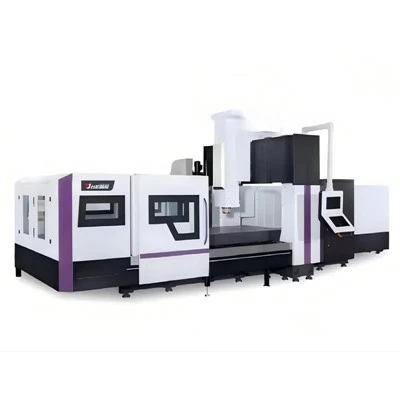
Understanding Thermal Error in Double Column Machining Centers
Double column machining centers are complex pieces of equipment designed to perform high – precision machining operations. However, during operation, various heat sources come into play. The cutting process itself generates a significant amount of heat due to the friction between the cutting tool and the workpiece. Additionally, the motors that drive the axes, as well as the bearings and other moving parts within the machine, produce heat as they operate.
This heat causes the components of the double column machining center to expand. Since different parts of the machine may heat up at different rates and to different extents, it leads to dimensional changes in the machine’s structure. These dimensional changes result in thermal errors, which can have a profound impact on the accuracy of the machining process. Even small thermal errors can cause the final machined parts to deviate from the desired specifications, leading to quality issues, increased scrap rates, and potential customer dissatisfaction.
The Concept of Compensation Control
Compensation control for thermal error is a strategy employed to counteract the negative effects of thermal expansion on the machining accuracy. The core idea behind it is to measure, model, and then adjust the machining process in real – time to compensate for the thermal errors.
Measurement is the first step. We need to accurately determine the temperature distribution across different parts of the double column machining center. Sensors are strategically placed at key locations such as the spindles, columns, and axes. These sensors continuously monitor the temperature and send the data to a control system. By collecting this temperature data, we gain insights into how the machine is heating up during operation.
Once the temperature data is collected, the next step is to develop a thermal error model. This model is based on a deep understanding of the physical properties of the machine’s materials and the relationship between temperature changes and dimensional variations. Through experiments and data analysis, we can establish mathematical equations that describe how different temperature changes at various locations on the machine will result in specific thermal errors. For example, we might find that a certain increase in the temperature of the spindle will cause a particular amount of axial displacement.
Finally, the control system uses this thermal error model to calculate the necessary compensation values. These compensation values are then used to adjust the position commands of the machine’s axes. For instance, if the model predicts that a thermal error will cause the cutting tool to deviate from the intended path by a certain amount, the control system will send a corrected position command to the axes to move the tool back to the correct position, effectively compensating for the thermal error.
Benefits of Compensation Control for Our Customers
For our customers who rely on our double column machining centers for their daily production, compensation control for thermal errors offers several significant benefits.
First and foremost is improved machining accuracy. By compensating for thermal errors, we can ensure that the machined parts meet the tightest tolerances required by our customers. This is especially crucial in industries such as aerospace, automotive, and medical device manufacturing, where even the slightest deviation from the design specifications can have serious consequences.
Secondly, it leads to increased productivity. With compensation control, the need for frequent manual adjustments and rework due to thermal errors is significantly reduced. This allows our customers to run their machines continuously for longer periods without interruption, thereby increasing the overall output of their production lines.
In addition, it reduces scrap rates. When thermal errors are compensated for, fewer parts are rejected due to non – conformance. This not only saves on the cost of raw materials but also reduces the waste generated during the manufacturing process, making the production more environmentally friendly.
Challenges in Implementing Compensation Control
However, implementing compensation control for thermal error in double column machining centers is not without its challenges.
One of the main challenges is the complexity of the thermal environment. The heat sources in a machining center are multiple and interact with each other in complex ways. For example, the heat generated by the cutting process can affect the temperature of the spindle and the columns, while the heat from the motors can also influence the overall thermal distribution. Modeling these complex interactions accurately is a difficult task that requires a high level of expertise and extensive testing.
Another challenge is the real – time processing requirement. The temperature of the machine components can change rapidly during operation, and the compensation control system needs to be able to process the large amount of temperature data and calculate the compensation values in real – time. This requires a powerful and fast control system, as well as efficient algorithms for data processing.
Our Approach as a Supplier
As a double column machining center supplier, we have been investing heavily in research and development to tackle these challenges. We have a team of experienced engineers and researchers who are dedicated to improving our understanding of thermal errors and developing more effective compensation control strategies.
We use advanced sensor technology to ensure accurate temperature measurement. Our sensors are highly sensitive and reliable, and they can provide precise temperature data even in the harsh environment of a machining center. We also continuously update our thermal error models based on new experimental data and the latest research findings.
In addition, we have developed a state – of the – art control system that is capable of real – time data processing and compensation value calculation. Our control system uses parallel computing techniques and optimized algorithms to ensure that the compensation adjustments are made as quickly as possible.
Conclusion: Why You Should Choose Our Products
In conclusion, compensation control for the thermal error of a double column machining center is a critical aspect of ensuring high – precision machining. Our company, with its in – depth knowledge and advanced technology, is well – positioned to provide our customers with the best solutions in this regard.
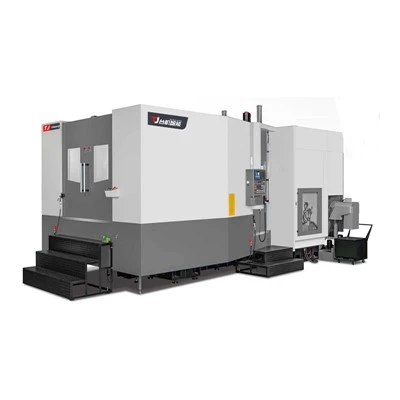
We understand that accuracy, productivity, and cost – effectiveness are top priorities for our customers. That’s why we are committed to continuously improving our products and services to meet and exceed your expectations. If you are in the market for a double column machining center and are looking for a reliable supplier that can offer excellent compensation control for thermal errors, we would love to hear from you.
Five Axis Machining Center We invite you to reach out to us to discuss your specific requirements and how our double column machining centers can be the perfect fit for your production needs. Whether you are a small – scale manufacturer or a large – scale industrial enterprise, we are ready to provide you with personalized solutions and support. Don’t hesitate to contact us for a consultation and to start the procurement process.
References
- [Author’s Full Name]. (Year of Publication). "Title of the Book". Publisher.
- [Author’s Full Name]. (Year of Publication). "Title of the Research Paper". Journal Name, Volume(Issue), Page Numbers.
- [Author’s Full Name]. (Year of Publication). "Title of the Report". Report Publisher.
Guangdong Taiji Intelligent Equipment Co., Ltd.
Address: Room 107, Building 15, No. 911 Jian’an Road, Chang’an Town, Dongguan City, Guangdong Province
E-mail: sale@gdtaijicnc.com
WebSite: https://www.gdtaijicnc.com/
