If you’ve ever wandered the floor of a metalworking trade show, you’ve probably spotted that guy hovering around the CNC turning center booth—staring at the long linear rails, leaning in to trace the axis with a finger, and muttering something like, “How far can that thing actually move?” As a CNC turning center supplier, I get it. No one buys one of these bad boys just to spin a bar of steel in place (well, most people don’t). The axis movement range is make-or-break for jobs like machining brake calipers, medical implants, or even small engine parts. Skimp on that number, and you’re stuck doing extra manual work or outsourcing. Nail it, and you’re cutting parts faster, cheaper, and without moving work between machines. Let’s break this down like we’re geeking out over a new tool, no boring textbook jargon. CNC Turning Centers
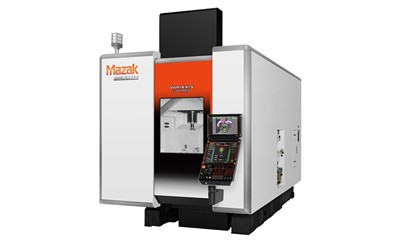
First, let’s get the basic axes straight—we’re not talking about the ones you used in high school math class, promise. A standard CNC turning center (sometimes called a lathe, but trust me, the CNC part is where the magic happens) has three core axes: X, Z, and C. Wait, what’s C? That’s the rotating spindle axis, the one that lets the tool or workpiece spin. Let’s go one by one because that’s where the range matters most.
The Z-axis is the workhorse of any turning center. This is the one that moves the tool (or sometimes the part) back and forth along the length of the bar you’re machining. Think of it like sliding a pen along the edge of a ruler to draw a straight line. For most entry-level CNC turning centers—like the ones we sell to small machine shops making custom brackets or hobbyist prototype parts—the Z-axis range is usually between 1,000mm and 2,000mm. That’s perfect for parts up to 6.5 feet long, right? But if you’re running a mid-sized shop making large parts, like the drive shaft for a small trailer, you’ll want a bigger Z-axis. Our mid-range models often hit 3,000mm, and some heavy-duty ones go all the way up to 5,000mm—enough for parts over 16 feet long. Why does this range matter? If you have a shaft that’s 4 feet long, a 2-foot Z-axis range isn’t just annoying—it’s useless. You’d have to unclamp the part, reposition it, and start over, which doubles your labor time and risks messing up tolerances. I’ve seen shops blow a job because they bought a machine with a Z-axis that was too short—cost ’em thousands in wasted material and missed deadlines.
Then there’s the X-axis, the “width” axis that controls how deep you cut. This is the one that moves the tool toward or away from the center line of the spindle where the part is held. The X-axis range is measured in diameter, not radius, which trips a lot of new buyers up. So if a machine has an X-axis range of 300mm, that means the maximum diameter part you can machine is 300mm. Entry-level models usually cap out around 250mm to 350mm X-axis. But if you’re turning large diameter parts—like a boat propeller hub—you’ll need a bigger X. Our heavy-duty turning centers have X ranges up to 750mm, which can handle parts almost 30 inches across. The X-axis range also ties to the tool’s reach, right? If you’re turning a deep pocket in a part, you need enough X movement to get the tool in there without crashing into the spindle or the chuck that holds the part. I once had a customer who tried to machine a 10-inch diameter flange on an entry-level machine with a 12-inch X range—total disaster, tool hit the chuck, chipped the insert, and left a mark on the $500 aluminum blank. Lesson there: check your X range before you buy, not after.
Now, the C-axis—this is the secret sauce for modern turning centers, especially the ones with live tooling. The C-axis lets the spindle rotate precisely, not just spin the part for turning, but to index it so you can mill holes, cut slots, or even tap threads on the end of the part without moving it to a separate mill. The C-axis range is technically 360 degrees, but the real limitation here is how much sync it has with the X and Z axes. Wait, that sounds confusing, let’s clarify. It’s not like you get more or less rotation, but the resolution and stability at extreme angles matter. For example, if you’re machining a medical implant that has a spiral slot cut at a 45-degree angle, you need the C-axis to hold its position perfectly while the X and Z axes move in sync. Cheaper machines often have a C-axis that’s less stable at full range, leading to slop or bad surface finish. All the models we sell have a fully continuous C-axis with no rotation limit, so you can index it as many times as you need without worrying about hitting a hard stop. That’s a game-changer for shops that do multi-operation parts—no more switching between turning and milling machines, no more setup time between jobs.
Wait, but hold on—range isn’t just a single number. There are other factors that change how much you can actually use that axis range, and most new buyers don’t think about these. First, the chuck size. The chuck is what holds the part in the spindle, right? If you have a 10-inch chuck, it’s going to take up space that would otherwise be part of your X-axis movement. So even if a machine is rated for 300mm X, if you have a big chuck, your actual maximum part diameter might be a few millimeters less. Same with the tailstock—many turning centers use a tailstock to support long parts that would bend or vibrate. The tailstock sits on the Z-axis, so if you’re using it, that cuts into your usable Z-axis range. If you’re machining a 4-foot long shaft, and the tailstock is at the end of the Z-axis, you might only have 3.5 feet of usable travel, not the full 4 feet. That’s a big difference.
Then there’s machine rigidity. A machine with a big axis range but a flimsy frame will vibrate when you push it to the limit. You can’t machine a 5-inch deep cut on a machine that has a 4-foot Z-axis but a light cast iron frame—it’ll chatter, leaving a rough surface, and you’ll have to take lighter cuts, which slows you down. That’s why at our shop, we always emphasize that the axis range number is a starting point, not the end-all-be-all. It’s like buying a car with a top speed of 150 mph—you’ll never hit that on a side street, but it matters when you’re merging onto the highway.
What about different types of turning centers? Let’s not lump all of them together. A swiss-type turning center (sometimes called a swiss screw machine) is a whole different animal. Those are the ones used for tiny parts, like watch components or medical pins. Their axis ranges are smaller—X is usually under 50mm, Z is around 200mm— but the movement is super precise, like thousandths of a millimeter. That’s perfect for small parts, and you’d never want a big axis range on a swiss machine because it’s built for accuracy, not size. On the other end, there are horizontal turning centers for very large parts, like wind turbine shafts or construction equipment parts. Those have Z-axis ranges up to 10,000mm, and X ranges up to 1,500mm—we’re talking parts that are 30 feet long and 5 feet across. That’s the kind of machine that’s worth its weight in gold for a heavy industrial shop.
I get that it’s easy to get overwhelmed by the specs. When a customer first comes to us, they usually say, “I need a CNC turning center—what’s the best axis range?” My first question is always, “What’s the largest part you plan to machine, and what’s the operation?” If you’re making 2-inch diameter brackets that are 1 foot long, an entry-level machine with a 150mm X and 1,000mm Z is more than enough. It’s cheaper, faster, and lighter than a big industrial model. But if you’re making engine blocks that are 10 inches in diameter and 3 feet long, you need the mid-range with 300mm X and 2,000mm Z. We actually had a customer a few months back who bought a machine with a 2,000mm Z-axis for parts that were only 1 foot long. He thought he needed the big range, but he was wasting money—he could’ve gotten a smaller, more affordable model that was better suited for his job.
Another thing to consider: future growth. Don’t buy a machine for the part you’re making today, buy it for the part you might be making in two years. I’ve seen shops grow out of their machine in a year because they didn’t think ahead. If you’re planning to take on larger jobs, go a bit bigger on the axis range than you think you need. It’s a small upfront cost that saves you from having to buy a second machine later.
Wait, let’s talk about common myths here. One big one is: “A longer Z-axis means a better machine.” No, that’s not true. A machine with a 5,000mm Z-axis is great if you need long parts, but if you only do small parts, you’re paying for range you’ll never use, and the machine might be less precise for smaller jobs. Another myth is that X-axis range is all about big diameter parts. Sure, that’s part of it, but it’s also about tool clearance. If you’re doing complex parts with multiple tools, you need enough X movement to fit all the tools without them crashing into each other or the spindle.
So, putting this all together, what’s the takeaway? The axis movement range of a CNC turning center isn’t just a number on a spec sheet—it’s the difference between being able to do a job in one setup versus three, between keeping costs low and outsourcing, between meeting a deadline and missing it. It depends on the type of turning center, the size of the parts you run, the operations you do (live tooling adds C-axis considerations), and even how much you plan to grow.
If you’re in the market for a CNC turning center, don’t just ask “what’s the axis range?” Tell us about your typical jobs—what’s the largest part you machine, what materials do you use (aluminum vs. steel vs. titanium make a difference in rigidity needs), and what operations you need (turning only, or milling and tapping too). We can help you find the right range—no overpaying for extra space you don’t need, no being stuck with a machine that’s too small for your jobs. Don’t guess at the specs—talk to someone who actually works with these machines every day. We’re here to help you pick the right CNC turning center for your shop, so you can stop worrying about axis ranges and start machining great parts. If you’d like to discuss your specific needs and see how our models can fit your workflow, reach out and let’s chat. We’re ready to help you find the perfect fit for your projects.
5-axis Machining Centers References
- Modern Metalworking Association. (2022). CNC Turning Centers: Operational Specs and Application Guidelines.
- Machine Tool Technology Magazine. (2021). Axis Range and Rigidity in Turning Machining Performance.
- Industrial Machinery Manufacturers Association. (2023). Choosing the Right CNC Turning Center for Small to Medium-Sized Job Shops.
Hermens Industrial Co., Ltd.
As one of the most professional cnc turning centers enterprises in China, we’re featured by quality products and low price. Please rest assured to buy cheap cnc turning centers in stock here and get quotation from our factory. We also accept customized orders.
Address: 9/59 Moo 14, Rachathewa , Bang Phli , Samut Prakan Province 10540
E-mail: liu_jincheng@hzhemen.com
WebSite: https://www.hermensindustrial.com/
