If you’ve ever spent time around a conveyor system, whether as a plant manager, maintenance technician, or even an operator on a warehouse floor, you know that nothing kills productivity faster than a chain that’s stretched out of shape. I’ve been in the conveyor chain supply business for over 12 years now, and I can’t tell you how many times I’ve gotten a frantic call at 7 a.m. from a client whose production line went down at 5 a.m. because their chains stretched so far they jumped the sprockets, grinding to a halt before their morning shift even started. That’s not a glitch in the system—it’s the result of a preventable issue, and today I want to pull back the curtain on exactly how to deal with conveyor chain elongation over time, straight from the perspective of someone who sells these chains and works side-by-side with clients every day to keep their lines running. Conveyor Chains
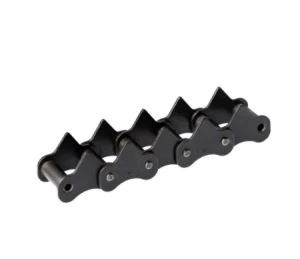
First, let’s cut through the noise: chain elongation isn’t a flaw in the chain itself. Wait, hear me out—yes, a low-quality chain will stretch faster than a high-quality one, but even the best heat-treated alloy steel conveyor chains will elongate over time. It’s a natural part of how these systems work, especially when they’re under constant load, moving heavy or abrasive materials, or operating around the clock. Elongation happens when the pins inside the chain links wear down, when the link plates stretch slightly under tension, or when roller surfaces wear against sprockets. Left unaddressed, that elongation leads to those line stops I mentioned, plus uneven tension, misalignment, and even damage to other parts of the conveyor, like sprockets or side frames.
The first step to dealing with elongation is knowing how to measure it correctly. A lot of guys I work with think they can eyeball a chain and tell if it’s too loose, but that’s a quick way to make a mistake. I always tell clients to use a simple, consistent method: stretch the chain out on a flat, level surface, pull it tight to remove any slack, and measure the length of a specific number of links. For most standard conveyor chains, that’s 10 links. Write that number down when the chain is new—that’s your baseline. Every few months, come back and measure the same 10 links. If the length has increased by 3% or more, that’s when you have a problem. Wait, 3%—is that a magic number? Yeah, for most industrial conveyor chains, that’s the industry standard threshold for replacement or adjustment. If it’s under 3%, you can likely fix the issue just by adjusting the tension. Over 3%, and you’re risking chain failure, so you need to take action before that happens.
Now, let’s talk about the immediate fixes, because that’s what most clients call me for when their line is already down. The first and most common solution is adjusting chain tension. This sounds simple enough, right? Just tighten the take-up bolts on the conveyor’s idler end until the chain is firm, not loose. But here’s the trick: too much tension is just as bad as too little. I’ve seen clients crank the take-up so tight that the chain is under double the recommended tension, which wears out pins and links 3 times faster, leading to even more elongation down the line. The right tension is when you can lift the chain 1 to 2 inches off the center of the span between two supports. For heavy-duty chains used in mining or automotive assembly, that might be a little less—1 inch max—because those lines carry way more load. Light-duty conveyor systems, like those in a parcel sorting warehouse, can handle a little more slack, up to 2 inches.
But what if adjusting tension only gets you so far? If you’ve maxed out the take-up travel (most conveyors have about 4 to 6 inches of take-up adjustment before they hit the end of their range), then elongation is past the point where tension adjustments work. That’s when you need to remove a section of the chain. Most standard conveyor chains are designed with removable links, so you don’t have to replace the entire chain if only a few links are stretched. Just disconnect the master link (we supply all the master links and connecting pins for the chains we sell, so this is a quick fix) and take out one or two links, then reattach the master link. It’s important to count carefully here—removing too many links will make the chain too tight, and removing too few won’t fix the slack. If you’re unsure, call a technician or the chain supplier to help, because getting this wrong will just create more problems later.
Now, let’s get to the proactive stuff, because the best way to deal with elongation is to prevent it from happening as much in the first place. This is where my experience as a supplier really comes in, because I’ve seen firsthand how different chain designs hold up differently over time. A lot of clients come to us with a cheap chain they bought online, and within a year it’s stretched so bad they need a replacement. High-quality conveyor chains—like the ones we manufacture from heat-treated alloy steel, with precision machined pins and link plates—have 2 to 3 times the wear life of low-carbon steel chains. The heat treatment process hardens the surface of the pins and links, reducing wear that causes elongation, and the precision machining means the pins fit tighter in the link holes, so there’s less side play that leads to uneven stretching.
But even a great chain needs regular maintenance to avoid excess elongation. I tell all my clients to follow a maintenance schedule, not just call when the line is down. Here’s what that schedule looks like, based on the type of conveyor: for a light-duty line (like small parts assembly or parcel sorting), check the chain every 3 months. For medium-duty (like food and beverage processing or warehouse shipping), check every month. For heavy-duty (like mining ore transport or automotive stamping lines), check every 2 weeks. During each check, not only do you measure elongation, but you also clean the chain. Dirt, dust, and debris get trapped between the links, acting like sandpaper and wearing down pins and links way faster. We supply special chain cleaners and lubricants designed specifically for conveyor chains—regular motor oil or general grease can attract more dust, leading to more wear, but the right lubricant repels debris and reduces friction, slowing elongation by up to 50% in some cases.
Another big proactive step is aligning the conveyor properly. If the conveyor frame is bent, or the sprockets are misaligned, the chain will rub against the side frames or wear unevenly on the sprocket teeth. I’ve seen a client with a 100-foot long conveyor that stretched 10% in 6 months because one of the sprockets was off by just 1/8 of an inch. That might not sound like much, but it caused the chain to bind and wear on one side, leading to rapid elongation. During maintenance checks, take 10 minutes to check sprocket alignment with a straight edge, and make sure the conveyor frame is straight and free of dents or damage. If you notice misalignment, fix it right away—don’t wait for the chain to stretch more.
Wait, what about extreme operating conditions? That’s a whole separate category, and it’s one I deal with a lot because we supply chains for industries that operate in really tough environments. For example, in steel mills, conveyor chains are exposed to high heat, which softens the metal and causes faster elongation. In agricultural operations, chains are exposed to moisture and corrosive materials like fertilizer, which eat away at the metal, leading to pin wear. For these applications, we offer specialized chains: heat-resistant chains with alloy steel that retains its strength at high temperatures, and corrosion-resistant chains coated in zinc or made from stainless steel. Using the right chain for the job isn’t a luxury—it’s a necessity to reduce elongation in harsh conditions.
Let me share a recent example to make this real. A few months ago, I got a call from a grain processing plant in the Midwest. They had a 80-foot conveyor moving wheat from the silo to the processing line, and their cheap imported chain had stretched so much that it was jumping the sprockets every other day, costing them thousands in lost production. They tried adjusting tension, removing links, even cleaning the chain, but nothing worked. When I visited the plant, we measured the elongation and found it was at 4.5%—way over the 3% threshold. They were about to replace the entire chain, but I suggested we swap it for a heavy-duty grain conveyor chain we supply, which has corrosion-resistant pins and a design that resists wear from abrasive grain. We also adjusted their maintenance schedule to check every two weeks, and within 3 months, their elongation was down to 1.2%, and they haven’t had a line stop from chain issues since. That’s exactly why I do this job—helping clients solve problems with practical, proven solutions, not just selling them a product.
Now, when is it time to replace the entire chain, instead of just adjusting it or removing links? If your chain has stretched more than 5%, that’s a clear sign it’s time for a full replacement. Why? Because at that point, the pins are so worn that even if you adjust or remove links, the wear will keep happening, and you’ll be dealing with the same issue in another few months. Also, if you notice any broken links, bent pins, or excessive rust or corrosion on the chain, replace it immediately—those are signs that the chain is structurally compromised and could fail suddenly, which is way more dangerous than gradual elongation.
I want to emphasize one last thing: don’t wait until your line is down to deal with chain elongation. I’ve heard too many clients say “it’s working now, we’ll handle it later” only to find themselves stuck with a 12-hour shutdown that cost them tens of thousands of dollars. Taking 10 minutes every month to measure elongation, check tension, and clean your chain is a small investment that saves you a lot of time and money in the long run. And if you’re not sure about anything—whether it’s measuring elongation, adjusting tension, or choosing the right chain for your system—don’t guess. Reach out to a reputable conveyor chain supplier who knows their stuff, because making a wrong call can lead to big problems.

If you’re dealing with conveyor chain elongation, whether it’s a minor issue that’s slowing you down or a major problem that’s causing downtime, I’m here to help. We work with plants, warehouses, and factories of all sizes to assess their conveyor systems, recommend solutions, and supply high-quality conveyor chains designed to resist elongation over time. Let’s talk about your specific needs—no sales pitch, no pressure, just practical advice to keep your lines running smoothly.
Driving Chain References
- Machinery’s Handbook, 31st Edition. Industrial Press, Inc., 2020.
- Conveyor Chain Design and Application Guidelines. Chain Association, 2021.
- Industrial Maintenance: Preventive Practices for Conveyor Systems. Elsevier, 2019.
- Wear Characteristics of Conveyor Chain Pins in Abrasive Environments. Journal of Industrial Engineering, vol. 15, no. 2, 2022, pp. 45-58.
Hangzhou Dongteng Industrial Co., Ltd.
As one of the most professional conveyor chains manufacturers and suppliers in China, we have world-leading production equipment and strong manufacturing capabilities. Please feel free to wholesale high quality conveyor chains made in China here from our factory. Also, custom service is available.
Address: Jingdong Village, Jingjiang Town, Xiaoshan District, Hangzhou City
E-mail: cocowu@dtc-chain.com
WebSite: https://www.dtc-chains.com/
