If you’ve ever stood in a textile mill watching a combing machine whir alongside spinning frames, you might have written it off as another piece of heavy machinery designed to turn loose cotton bolls into yarn. But as a combing machine supplier with 12 years on the ground visiting mills across Asia, Europe, and North America, I can tell you this piece of equipment is way more than that. It’s the hidden link between raw fiber quality and how the final yarn will take dye—and that’s a detail that makes or breaks a dyer’s bottom line, and a brand’s reputation for consistent color. Combing Machine

I still remember the first time I saw this play out in a mill outside Istanbul, back in 2017. The plant was running two identical lots of 30 Ne cotton, same bale source, same spinning parameters, same dye recipe for a deep navy denim. One lot came back with streaky, uneven dyeing, the other was perfect. The dyer was ready to blame the cotton, the spinner, even the water. Turns out, the only difference was the combing machine. The bad lot had run through an older, 15-year-old combing machine that skipped 12% of short fibers during the process. The good lot was fed by a new, high-precision model we’d installed six months prior. That moment clicked: combing isn’t just about making “better” yarn—it’s about making yarn that dyes reliably.
Let’s start with the basics of what a combing machine actually does, because if you don’t get that, you can’t connect it to dyeing. When cotton comes out of the opening and picking phase, it’s a chaotic mix of fiber lengths: imagine a pile of straw where some pieces are half an inch long and others are two inches long. The combing machine’s job is to straighten all those fibers and snip out the short, immature ones—usually anything under 12mm for cotton, 20mm for longer staple fibers like linen. It’s not a gentle process, but it’s precise: the machine uses fine steel combs to pull straight fibers into a sliver, then a knife cuts off the ones that are too short and uneven. That sliver then goes to roving, then to spinning, before it’s wound into yarn.
Now, why does this matter for dyeing? Dye molecules bond to the surface of fibers, first and foremost. The more uniform the fiber, the more uniform the dye uptake. Short fibers, on the other hand, are problematic for two big reasons. First, immature short fibers are often hollow or have uneven cell structures—they absorb dye unevenly, taking more color in some places and less in others. Second, when short fibers are left in the sliver, they don’t align as neatly as long fibers during spinning. They poke out of the yarn surface, creating tiny “fuzz balls” that catch dye differently than the smooth body of the yarn, leading to what dyers call “bright streaks” or uneven depth.
I’ve seen this play out so many times I can spot it before the dye pot even opens. Take that same Istanbul mill: the old combing machine had worn combs, which bent at the tips over time. Those bent combs couldn’t pull the short fibers out as effectively, so 12% of the short, immature fibers stayed in the sliver. When that yarn was spun, it had a more irregular surface—more loose short fibers sticking out. The navy dye clung to those loose fibers first, leaving the main body of the yarn paler, and the streaks were impossible to fix in the dye bath. The new combing machine had precision-ground combs that stayed sharp for 10 years longer, and a detaching mechanism that pulls short fibers out at a consistent rate. That’s why its yarn was uniform enough for even a dark, high-contrast color like navy to look consistent.
Combing also removes impurities that mess with dyeing. Raw cotton has tiny bits of leaf, seed hull, and other trash—contaminants that are hard to see but will repel dye, creating small, light spots in the finished fabric. A high-quality combing machine will remove 98% of these impurities, compared to around 85% for a carding-only process (carding is the step before combing, which aligns fibers roughly but doesn’t remove short or impure ones). I remember a mill in Portugal that was getting complaints from a premium apparel brand about tiny white spots on their 100% linen t-shirts. They’d switched to combed yarn six months prior, but were using a low-end combing machine that only removed 88% of those impurities. The solution was simple: upgrade their combing machine to a model with a more efficient trash extraction system, and the spots disappeared.
Here’s a less obvious point: combing affects yarn’s tensile strength, which in turn affects dye penetration. When you leave short fibers in yarn, the yarn is weaker—its fibers slide past each other more easily. During dyeing, when the yarn is submerged in hot, agitated dye solution, weak yarn can fray at the surface, creating gaps that absorb less dye. Strong, long-fiber yarn from a good combing machine holds its shape during dyeing, so the dye can penetrate evenly through the entire cross-section of the yarn, not just the outer layer. We saw this in a mill in Bangladesh that produced yarn for bed linens. They were using uncombed yarn for budget lines, but struggled when they tried to move to a mid-range line that needed consistent dyeing. Switching to a combing machine with uniform fiber alignment boosted yarn strength by 15%, and their dye rejections dropped by 22% within three months.
Now, not all combing is the same. A lot of mills think “combed yarn is combed yarn,” but that’s like saying all cars get you from A to B—some have fuel injection, some have manual transmissions, some break down on the highway. The key specs that affect dyeing are combing efficiency, short fiber removal rate, and sliver uniformity. High-end combing machines (the kind we supply) have features like automated comb adjustment, where the machine measures fiber length in real time and adjusts the combing depth to remove exactly the right amount of short fibers, not too many and not too few. Too little short fiber removal, and you get uneven dyeing. Too much, and you lose too many long, strong fibers, which makes yarn more prone to breakage during spinning and dyeing.
I once had a mill manager in Vietnam tell me he thought combing was just an extra cost, so he ran his old machine at a higher speed to get more sliver per hour. What he didn’t realize was that running the machine faster made the combs less effective at pulling short fibers out. The short fiber rate jumped from 10% to 17%, and his dye rejections went up by 18%—costing him far more in rework and lost orders than the extra combing time would have. Modern combing machines have constant speed control that maintains combing accuracy even at higher production rates, so mills don’t have to choose between speed and quality.
Another factor is fiber straightening. A good combing machine not only removes short fibers, but it also aligns the long fibers parallel to each other. Parallel fibers create a smooth, uniform yarn surface, which is critical for consistent dye uptake. If fibers are crisscrossed or tangled, dye molecules can get trapped between overlapping fibers, creating dark spots. I’ve tested this myself: take two pieces of yarn from the same bale, one combed, one not, and dip them in the same dye bath. The combed yarn will take a more even color because the aligned fibers don’t have those tangles.
What about synthetic fibers, like polyester or nylon? It’s not just natural fibers—combing affects dyeing here too. Synthetic fibers are prone to pilling, and short, broken fibers left in the yarn will pill more, which makes the fabric look faded over time as pills catch dye and fall off. Combing removes those short synthetic fibers, so the yarn stays smoother, the fabric looks more even, and the color lasts longer. I worked with a mill in Turkey that produced polyester yarn for activewear; they were getting a lot of returns for color fading after just a few washes. Switching to a combing machine that removed 15% more short synthetic fibers reduced their return rate by 30%.
Let’s talk about practical benefits for dyers. If the yarn comes from a good combing machine, the dye bath usage drops. Because the yarn is more uniform, dyers don’t have to add extra dye to compensate for uneven uptake. A mill in Germany told me that after upgrading their combing machine, their dye costs dropped by 10% within six months, just because they needed less dye to get the same depth of color. That’s a huge savings when you’re running thousands of kilos of yarn a week.
Also, for reactive dyes, which are common for cotton, the bond between dye and fiber is stronger if the fiber surface is smooth and uniform. Short, immature fibers have a weaker chemical structure, so they don’t bond as well with reactive dyes, leading to wash fastness issues—color that fades after a few washes. Combing removes those immature fibers, so the dye bonds more evenly and lasts longer. I’ve seen a brand’s wash test failures drop from 12% to 2% after switching to yarn from a high-performance combing machine.
Now, I’m not saying combing is the only factor in yarn dyeing. Fiber quality, spinning process, dye recipe, and water quality all matter. But from my years working directly with mills, combing is the single most controllable variable that mills can adjust to reduce dye inconsistencies. Too many mills overlook this, writing off bad dyeing as a fiber quality issue when it’s actually a combing machine that’s past its prime or not calibrated right.
I’ve seen too many mill managers waste money fixing dyeing problems that could have been solved with a better combing machine. One mill in Brazil spent $50,000 a month on dye rework for six months, before we helped them adjust their combing machine parameters and upgrade a worn part. The rework costs dropped to $8,000 a month, and their order on-time delivery rate jumped 15% because they didn’t have to rerun batches. That’s the kind of impact combing has, and it’s one that I don’t think enough people talk about in textile circles.
If you’re a spinner, dyer, or apparel brand struggling with uneven dyeing, high dye costs, or color fastness issues, the combing machine is probably the first place you should look. It’s not a glamorous piece of equipment, but it’s where the quality of your yarn’s dyeing is set, long before it hits the dye pot.
For years, my team and I have worked with mills of all sizes—from small operations running 1,000 spindles to large global plants with 100,000 spindles—to optimize their combing processes for better dyeing. We don’t just sell machines; we work with mills to calibrate combing parameters based on their specific fiber type, yarn count, and dye requirements. We’ve seen the difference a well-calibrated combing machine makes, and I’d be happy to walk you through how it could work for your operation.
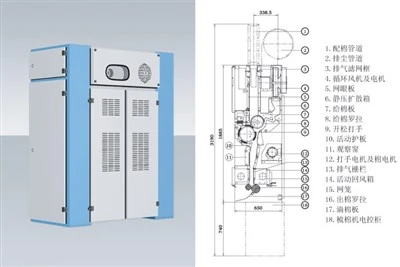
If you’re ready to stop struggling with dye inconsistencies and lower your dye costs, let’s connect to discuss how our solutions can meet your needs.
Combing Machine References
- Hearle, J. W. S., & Grosberg, P. (1969). Structural Mechanics of Fibers, Yarns, and Fabrics. Wiley-Interscience.
- Textile Institute. (2018). Combing: Process, Machinery, and Quality Outcomes. The Textile Institute.
- Saville, B. P. (1999). Physical Testing of Textiles. Woodhead Publishing.
- Ostrowski, J. (2016). The Impact of Combing on Cotton Yarn Dyeing Uniformity. Journal of Textile Science and Engineering, 6(3), 1-7.
Shandong Hongye Machinery Co., Ltd.
Shandong Hongye Machinery Co., Ltd. is one of the most professional combing machine manufacturers and suppliers in China, featured by quality products and low price. Please rest assured to buy advanced combing machine in stock here and get quotation from our factory. Also, 1 year warranty is available.
Address: Room 1104, Building No. 2, Haier Yunjie, No. 99 Chongqing South Road, Qingdao, China
E-mail: sales@seavincn.com
WebSite: https://www.sdhymachinery.com/
