If you’ve ever worked in electrical component manufacturing, you know that a one-size-fits-all approach rarely sticks when it comes to busbar assemblies. Early in my career, I saw a small industrial panel shop sink weeks into custom work for a new client’s busbars—hand-drilling, bending, and fitting each piece by hand—only to miss a delivery window because the client changed their insulation requirements mid-project. That experience stuck with me, and when I started my business supplying busbar assembly machines, I made sure to build flexibility into every model. Today, one of the most common questions I get from new clients is: Can a busbar assembly machine be modified to meet special assembly requirements? The short answer is yes, but the how and why matters, and it’s rooted in understanding both the machine’s core design and the unique needs of your application. Busbar Assembly Machine
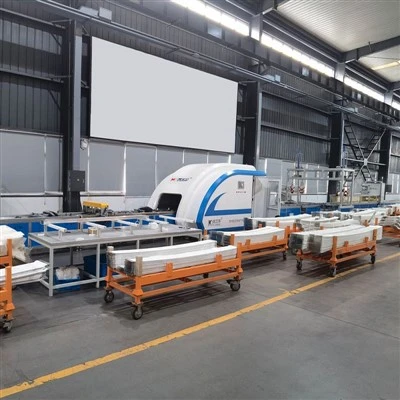
Let’s start with what a standard busbar assembly machine does. These systems automate the repetitive, precision-focused tasks of busbar production: cutting copper or aluminum bars to length, punching holes for connections, bending to fit tight enclosures, and applying insulation sleeves or shrink-wrap. Standard models are built to handle common busbar sizes (like 60mm x 10mm or 100mm x 12mm) and basic assembly steps, but special requirements pop up all the time—from aerospace-grade busbars that need anti-corrosion plating, to renewable energy busbars that must fit compact solar inverter enclosures, to industrial switchgear that requires multiple layers of insulation and unique hole patterns.
Last year, a client in the offshore wind industry reached out. They were producing busbars for turbine switchgears, which have to withstand saltwater, extreme temperature fluctuations, and heavy vibration. Their standard busbar machine couldn’t handle the thick, high-conductivity copper alloy they’d switched to, nor could it apply a specialized epoxy coating that prevented corrosion. We didn’t sell them a whole new machine—we modified our existing semi-automatic model by upgrading the cutting head to use a high-torque blade optimized for hard copper alloys, adding a robotic arm attachment that applied the epoxy coating with consistent thickness, and calibrating the punching station to account for the alloy’s slight thermal expansion during coating. The modification cut their assembly time per busbar by 28% and eliminated the human error that came with hand-applied coatings. That’s the kind of targeted modification that works, and it’s why we prioritize modular designs in all our machines.
Modularity is the foundation of successful modifications. Our standard machines are built with interchangeable parts: cutting heads, bending fixtures, punching dies, and insulation applicators all connect to a central control system that can be reprogrammed on-site. For a client making busbars for electric vehicle (EV) batteries, we might swap a standard bending fixture for a smaller, high-precision one that fits the compact busbars used in EV packs—busbars that often have tight, 90-degree bends within a 5mm radius. For a client assembling busbars for data centers, which require multiple parallel busbars with consistent spacing, we can add a multi-axis feeding system that loads and aligns up to six busbars at once, a modification that would be impossible with a non-modular machine.
But modifications aren’t just about swapping parts. Sometimes they’re about upgrading software or integrating custom safety features. A food processing equipment manufacturer recently needed busbars for their control panels that had to meet strict hygiene standards—no sharp edges, exposed metal, or crevices where bacteria could grow. Our standard machine’s trimming station left slight burrs on the busbar ends, which the client couldn’t have. We modified the machine’s software to add a final deburring step, using a nylon brush attachment that runs along every edge of the busbar after cutting, and programmed the control system to send a alert if any burr is detected. That’s a software modification paired with a minor hardware change, and it’s a great example of how even small adjustments can meet special requirements.
Of course, not all modifications are created equal, and there are a few key factors to consider when deciding if a modification is right for your business. First, your machine’s age and core design matter. A 10-year-old machine might not have the processing power or structural capacity to support a high-torque cutting head or robotic attachment. In that case, a modification might not be cost-effective, and a new, modular machine would be a better investment. Second, the volume of your production. If you’re making 100 custom busbars a month, a $5,000 modification makes sense. If you’re making 10,000, you might need a more extensive upgrade, like adding a full automation line. Third, your long-term requirements. If you think you’ll only need that specialized epoxy coating for one project, a temporary modification might work, but if you’ll need it for all future orders, a permanent upgrade is the way to go.
I’ve also learned that the best modifications come from collaborating closely with clients. Last quarter, a client in the medical device industry reached out with a very specific request: their busbars for MRI machines can’t contain any magnetic materials, so all components of the assembly machine that touch the busbar have to be non-ferrous. Our standard machine uses steel clamping fixtures, which would interfere with MRI readings. We worked with the client’s engineering team to design custom aluminum and brass clamping fixtures, modified the machine’s control system to reduce electromagnetic interference, and tested the entire setup in their facility to make sure it didn’t disrupt their MRI testing. That modification didn’t just meet their needs—it built a long-term partnership, and they’ve since referred two other medical device manufacturers to us.
One common misconception is that modifying a busbar assembly machine will void its warranty. For our customers, that’s not the case. We offer a flexible modification warranty that covers parts and labor for 12 months after the modification is installed, as long as it’s done through our team or a certified partner. We also provide on-site training for any software changes, so your operators don’t have to spend weeks learning a new system. For clients who prefer to handle some modifications themselves, we provide detailed design drawings and programming guides, and our support team is available to troubleshoot remotely.
Let’s talk about cost, because that’s a big factor for most manufacturers. A custom busbar machine can cost anywhere from $50,000 to $200,000, depending on its capabilities. A modification, on the other hand, usually costs 20-30% of that, making it a much more affordable option for small to mid-sized manufacturers. For example, a small renewable energy startup might not have the budget for a full custom machine, but they can modify a standard model to handle the unique busbar sizes and insulation requirements of their solar inverters for a fraction of the cost. That’s why we’ve seen so many small and medium businesses use modifications to scale their production without breaking the bank.
Of course, there are limits to what modifications can do. You can’t turn a semi-automatic machine into a fully automated production line overnight, though you can add robotic attachments to get close. You can’t modify a machine to handle busbars that are twice as thick as its maximum rated capacity, no matter how many parts you swap. The key is to work with a supplier who understands the machine’s capabilities and can manage expectations. We always start with an assessment: we ask clients for their busbar specifications, production volume, timeline, and long-term goals, and then we present a modification plan that fits their needs and budget. If a modification isn’t the best option, we’ll be honest about that and recommend a solution that is.
At the end of the day, the ability to modify busbar assembly machines is what gives manufacturers the flexibility to compete in today’s market. Industries are changing fast—EVs are demanding new busbar designs, data centers need higher power density, renewable energy requires more durable components—and one machine that works today might not work tomorrow. Modifications let you adapt to those changes without starting from scratch, saving you time and money.
If you’re a manufacturer struggling with a busbar assembly machine that can’t keep up with your special requirements, don’t write off modifications as too complicated or too expensive. Reach out to a supplier who specializes in busbar assembly machines, share your needs, and talk through your options. Whether it’s adding a new cutting head, upgrading your software, or integrating a robotic arm, there’s a good chance a modification can help you meet your production goals.
I’ve spent years working with busbar assembly machines, and I’ve seen firsthand how a well-executed modification can turn a good machine into a great one. It’s not just about changing a part or updating a setting—it’s about understanding your business, your products, and the challenges you face, and building a solution that fits. So if you’re ready to stop settling for a machine that only does “standard” busbars and start building something that meets your unique needs, let’s connect. We can walk through your requirements, discuss modification options, and find a solution that works for your budget and timeline.
Busbar Accessories References
Busbar Assembly: Design, Materials, and Applications, Electrical Manufacturing and Maintenance Association, 2022.
Modular Manufacturing Systems: Adapting to Custom Production Needs, Journal of Manufacturing Engineering, Vol. 19, No. 3, 2021.
Offshore Wind Component Manufacturing: Quality and Compliance Standards, International Electrotechnical Commission, 2023.
Suzhou Kiande Electric Co., Ltd.
Suzhou Kiande Electric Co., Ltd. is one of the most professional busbar assembly machine manufacturers and suppliers in China, also supports custom service and OEM&ODM service. Welcome to buy durable busbar assembly machine made in China here and get quotation from our factory. Quality products and reasonable price are available.
Address: No.123, Suzhou Avenue East, Suzhou Industrial Park Suzhou, Jiangsu 215000 China
E-mail: saleswmkc@kiande.cn
WebSite: https://www.busbarcncmachine.com/
